
Case workflows
See the workflow, not only the finished guide.
The strongest evidence is how a case is understood, checked, reviewed and approved. Each published example is organised by objective and follows one consistent, transparent pattern.
Every published case is de-identified and consent-cleared. No patient identity, DICOM/STL files or clinical records appear on the public website.
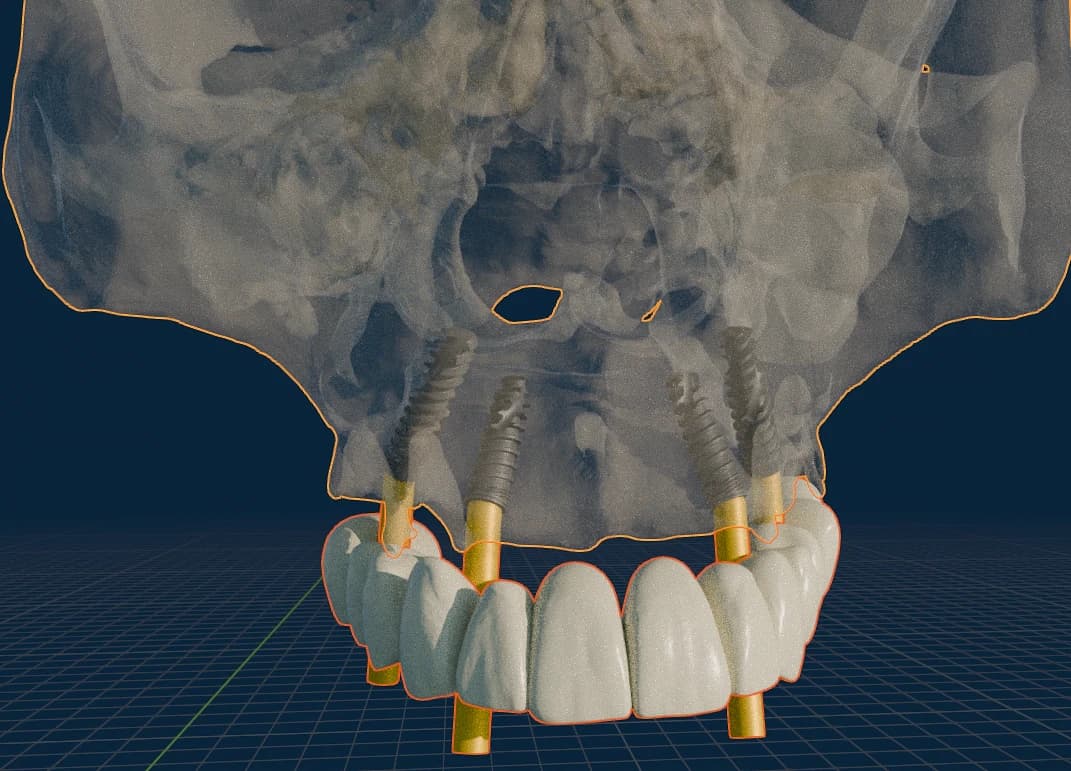
Every case uses the same evidence pattern
Rather than a gallery of unrelated images, each case is shown as one connected sequence — so a dentist can judge the thinking, not just the finished component.
- 1Starting condition
- 2Treatment objective
- 3Data received
- 4Key planning decision
- 5Approval point
- 6Deliverables
- 7Disclosed limitations
How a published case reads
Each case is presented as one connected story, in the same order every time. The planning view below is an approved, de-identified render shown to illustrate the format — it is not a specific patient case.
- 1Starting condition — the presentation and constraints the case begins with.
- 2Treatment objective — the restorative result the plan is built to serve.
- 3Data received — the records used, and any that had to be re-captured.
- 4Key planning decision — the choice that most shaped the plan.
- 5Approval point — what the treating clinician reviewed and approved.
- 6Deliverables — the files or components released, by scope.
- 7Disclosed limitations — what the case does not claim.
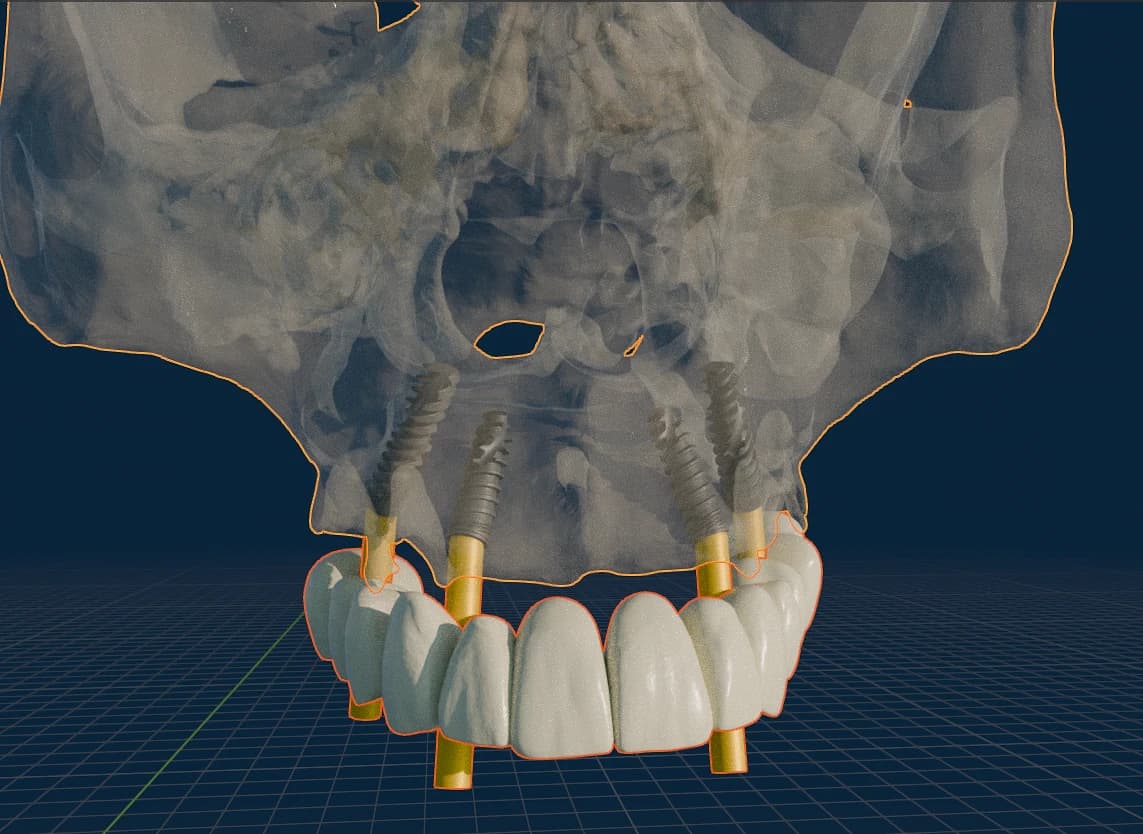
Organised by case objective
Explore the workflow behind each case type while consent-cleared examples are prepared.
Single & multiple implants
Restoration-led guided placement for routine cases.
Guided implant workflowFull arch
Stackable sequence from reduction to provisional reference.
Full-arch workflowImmediate loading
Plan, guide and provisional kept aligned before surgery.
Immediate-loading workflowZygoma & pterygoid
Advanced anchorage where anatomy and restoration must agree.
Advanced planning
Published examples are prepared carefully
Case examples are added only once they are de-identified and consent-cleared, with outcomes attributed to the treating clinician and documented follow-up. Until then, the workflow pages show the planning and design approach behind each case type.