
Zygoma & pterygoid planning
Advanced implant planning where anatomy and restoration must agree.
Planning and workflow support for qualified treating clinicians managing zygomatic and pterygoid cases, coordinated around anatomy, implant trajectory and the prosthetic plan.
This is planning and workflow support for qualified treating clinicians. Digital planning does not remove the clinical risk of advanced surgery; diagnosis, indication, consent and execution remain with the treating team.
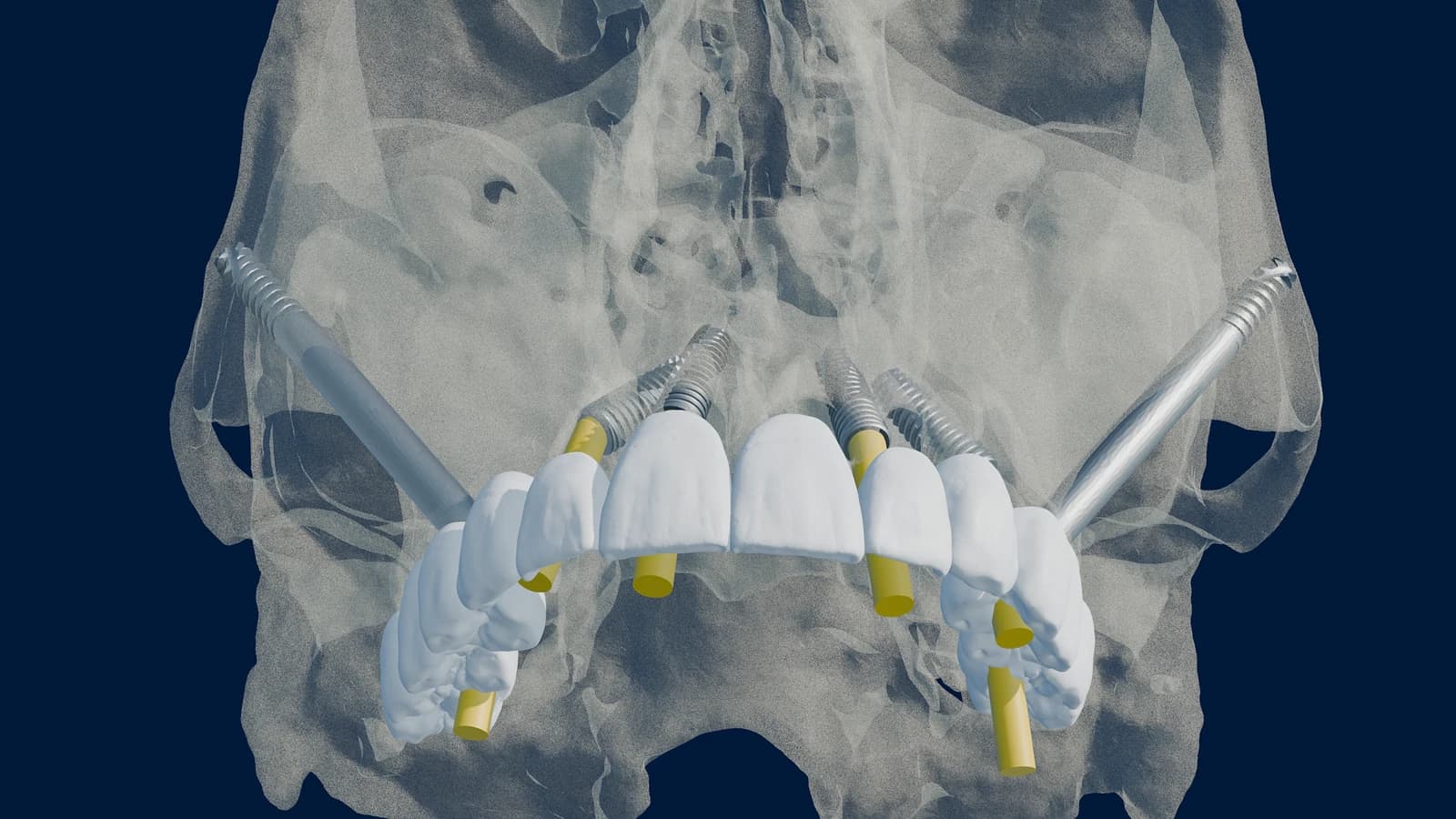
What this workflow protects
Advanced anchorage cases live or die on the agreement between anatomy, trajectory and the intended prosthesis. This workflow protects that agreement by reviewing each as a distinct, documented stage — and by keeping responsibility and approval boundaries explicit for the treating team.
Distinct planning stages
- 1Anatomy review
- 2Implant trajectory
- 3Prosthetic reference
- 4Guide concept
- 5Recorded approval
Workflow detail
Records that may be required
- Extended field-of-view CBCT / DICOM
- Intraoral or model scans
- Prosthetic reference and smile setup
- Clinical context and professional leadership
What is coordinated
- Anatomy and trajectory alignment
- Restorative intent against anatomy
- Guide concept where applicable
- Documented review and approval
Produced models and guides
Physical verification models and guides produced alongside advanced-anchorage planning.
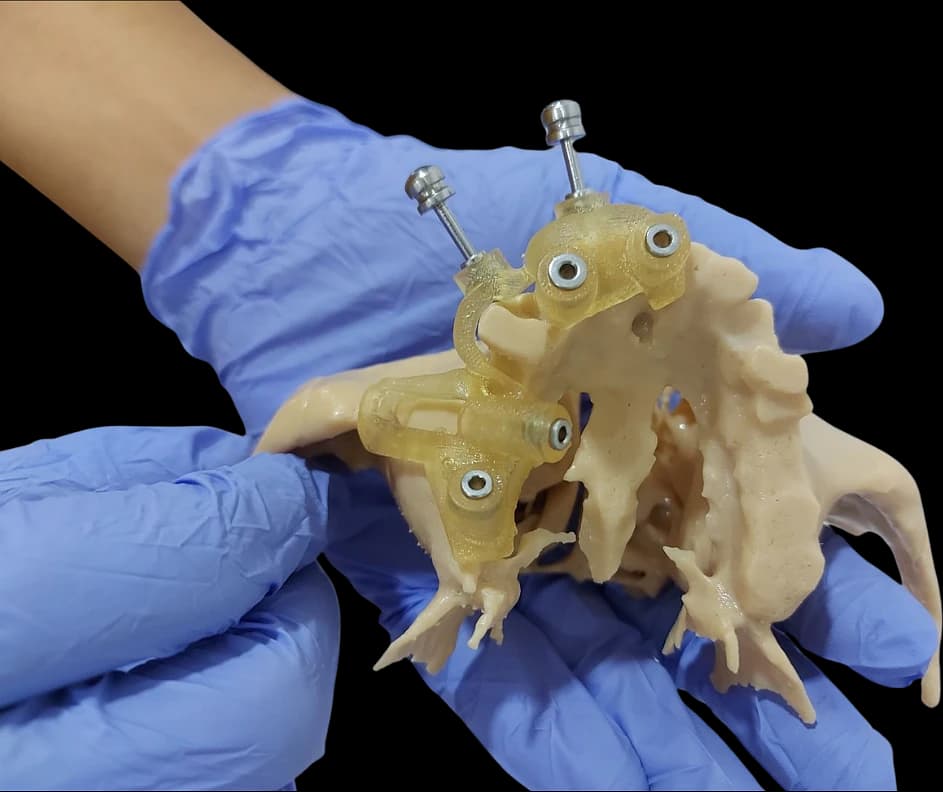
Printed zygomatic model with surgical guides. 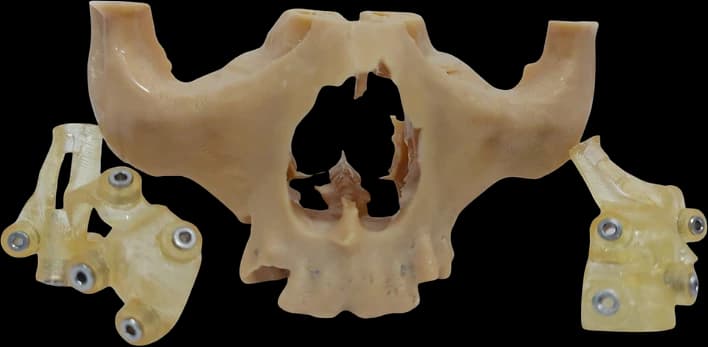
Printed anatomical bone models for verification.
Representative produced output and planning renders. Every asset is de-identified; images are illustrative of the workflow, not a specific patient case.
Where cases commonly stall
These are the issues we check for up front, so a case does not lose time in planning or come back for avoidable rework.
- Field of view that does not fully capture the zygomatic or pterygoid region
- Prosthetic intent not shared, so trajectory review lacks a target
- Unclear clinical leadership for a case that demands it
- Expecting a guide to substitute for surgical judgement
Common questions
Discuss the case first if…
always. Advanced cases should begin with a workflow conversation and a non-identifying summary before any records are submitted, so responsibility and scope are clear from the start.
Discuss an advanced case.
The Case Portal is live for invited practices. Request an invitation, or discuss the case with the team if the workflow is still being defined.