
Immediate-loading workflow
Align the plan, the guide and the provisional before surgery.
Coordinate the approved implant plan, surgical guide and immediate provisional references so they stay aligned before the planned loading appointment.
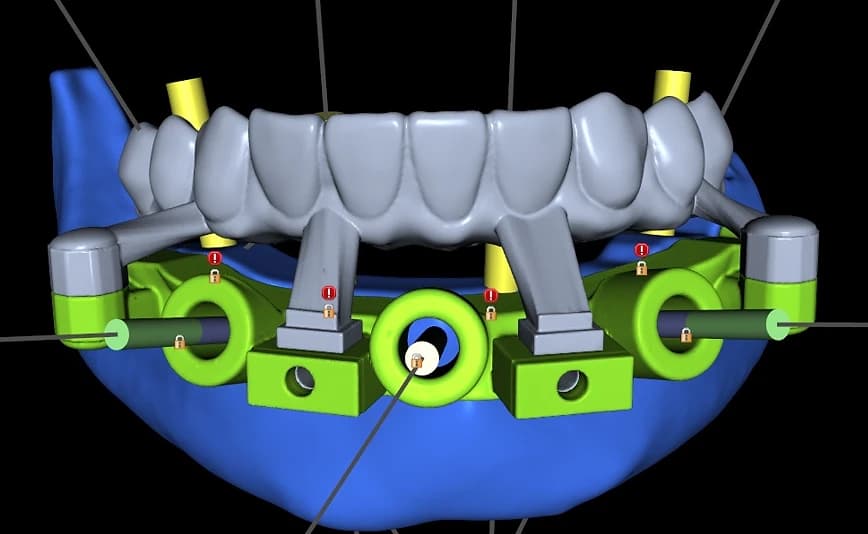
What this workflow protects
Immediate loading fails when the plan, the guide and the provisional drift apart. This workflow protects their alignment: smile reference, vertical dimension, occlusion and restorative space are agreed up front, and preoperative design, intraoperative pickup and the definitive restoration are kept as distinct stages — not merged into one promise.
Workflow detail
Prosthetic classification
- FP1, FP2 and FP3 language clarified where it affects the design
- Restorative space and emergence
- Occlusion and vertical dimension
What must be approved first
- Implant plan
- Guide concept
- Provisional reference — before guide and provisional production
What the dentist receives
- Aligned plan and guide
- Provisional reference for the appointment
- Clear separation of preoperative and intraoperative stages
Plan, guide and provisional as produced output
The aligned guide and provisional references that support the loading appointment.
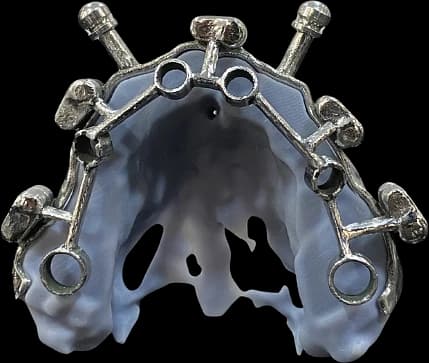
Metal-reinforced guide for the placement stage. 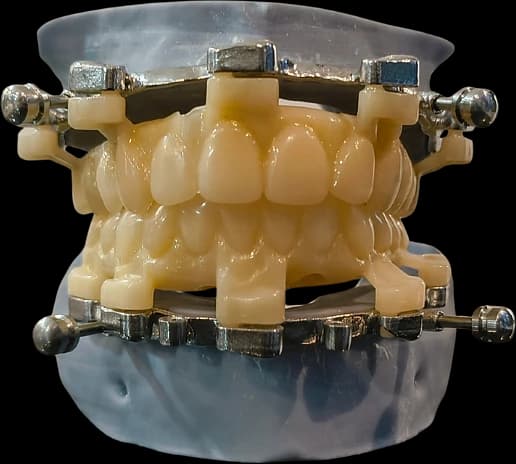
Provisional verified in occlusion before delivery. 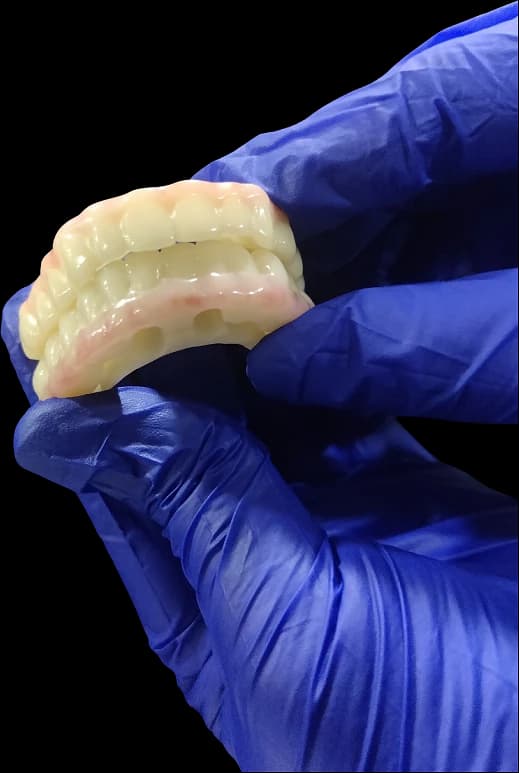
Printed temporary prosthesis for the appointment.
Representative produced output and planning renders. Every asset is de-identified; images are illustrative of the workflow, not a specific patient case.
Where cases commonly stall
These are the issues we check for up front, so a case does not lose time in planning or come back for avoidable rework.
- Provisional reference missing, so alignment cannot be confirmed before surgery
- Vertical dimension and occlusion not captured with the records
- Preoperative design and intraoperative pickup treated as one step
- Restorative space underestimated for the intended prosthesis
Common questions
Discuss the case first if…
the loading protocol, provisional type or aesthetic expectation is still being defined, or the surgical and restorative steps are handled by different providers.
Review immediate-loading requirements.
The Case Portal is live for invited practices. Request an invitation, or discuss the case with the team if the workflow is still being defined.